Compare discharge recirculation and external seal flush by fluid cleanliness, pressure, dilution, utility reliability, and the cost of keeping faces lubricated.
On this page
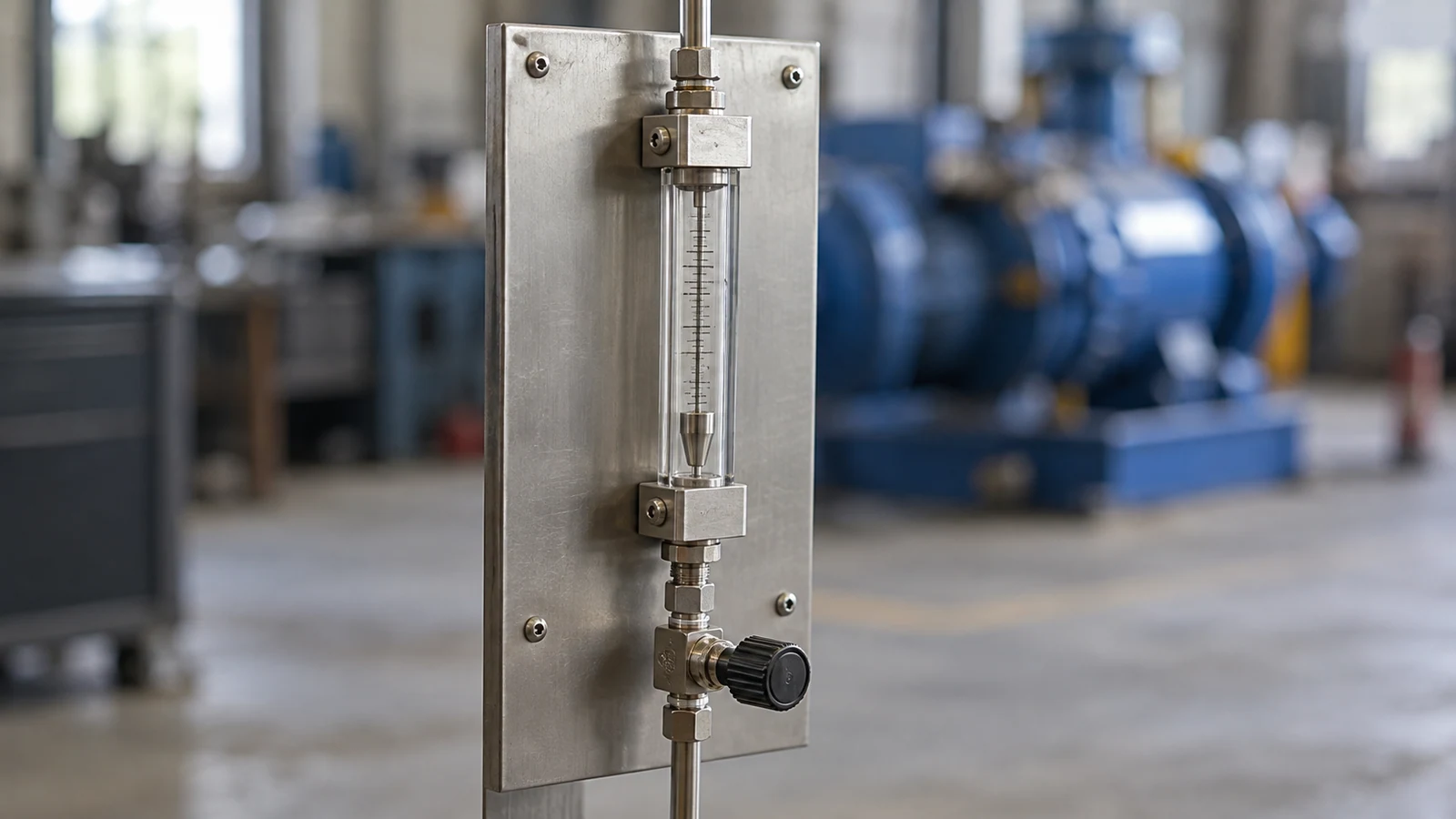
A clean process liquid can often lubricate its own pump seal. A liquid carrying abrasive particles, polymerizing material, or inadequate lubricating properties may need a different fluid at the faces. That difference is the starting point for choosing between API Plan 11 and Plan 32.
Plan 11 recirculates some pump discharge liquid to the seal chamber. Plan 32 supplies liquid from an external source. The choice affects both seal operation and the plant: a separate flush brings another utility to maintain and, normally, another liquid into the product.
What is the difference between Plan 11 and Plan 32?
Plan 11 uses pressure available within the pump to move process liquid toward the seal; Plan 32 uses a separately supplied liquid at a pressure above the seal chamber. Plan 11 therefore depends on the suitability of the pumped liquid, while Plan 32 depends on the quality and reliability of the external supply.
AESSEAL describes Plan 11 as discharge recirculation through a flow-control orifice and identifies clean, non-polymerizing liquids at moderate temperatures as typical applications. Its Plan 32 guidance describes an external clean or cool flush and emphasizes compatibility, continuous supply, and control of contamination entering the process.
| Selection issue | Plan 11 | Plan 32 |
|---|---|---|
| Liquid reaching the chamber | Pumped process liquid | Separately selected flush liquid |
| Driving pressure | Discharge-to-chamber differential | External-supply-to-chamber differential |
| Solids at the faces | Solids in the process can enter the flush path | Clean flush can help exclude process contamination |
| Product composition | No separate liquid deliberately added | Flush usually adds to the process inventory |
| Operating dependency | Pump duty and recirculation path | Utility availability, quality, pressure, and flow |
| Cost to compare | Hydraulic recirculation and maintenance | Flush supply, treatment, dilution, and maintenance |
These are functional distinctions. The project’s selected API 682 edition and the seal manufacturer’s arrangement drawing still define the detailed installation.
Follow the pressure at the chamber
Discharge pressure is useful only in relation to seal-chamber pressure. The available differential must overcome losses in the connecting line, fittings, and flow-control device while delivering the required flush. Changing the pump operating point can change that differential.
For example, suppose a pump has 8 bar gauge discharge pressure and 5 bar gauge chamber pressure at one operating point. The initial differential is 3 bar. If a different operating state raises chamber pressure to 7 bar while discharge remains 8 bar, only 1 bar remains before line losses. A flush arrangement selected at the first condition needs to be evaluated at the second. Those values illustrate the pressure balance; they are not a recommended operating margin.
The same reasoning applies to an external header. Its nameplate pressure does not show what is available at the gland after a long pipe run or when other users draw liquid. A pressure reading upstream of a partly blocked filter can look healthy while flow into the chamber falls.
The useful procurement input is a set of chamber, discharge, and utility conditions for normal running, startup, shutdown, and standby. The seal duty data sheet guide explains how to collect the underlying process information.
Cleanliness and compatibility can change the answer
Plan 11 returns the same liquid the pump is handling. Recirculation does not turn a slurry into a clean lubricant. Adding a filter also creates a maintenance item and a possible restriction; any filtration arrangement needs its own design assessment.
Plan 32 provides more freedom to choose the fluid at the faces, but compatibility has several dimensions. The flush must work with the process chemistry, seal-face pair, secondary seals, and downstream product requirements. Mixing two individually manageable liquids can still produce precipitation, viscosity changes, or a product-quality problem.
A close-clearance throat bushing helps manage the exchange between the chamber and the pump interior in a typical Plan 32 arrangement. Its geometry belongs with the chamber and flush design. Specifying only a water flow meter leaves that important part of the system undefined.
Temperature also matters. A cooler external liquid can remove heat, yet its behavior after entering a hot chamber determines whether a stable liquid film remains available. Hot, clean duties may instead justify evaluating a chamber recirculation and cooling arrangement such as Plan 23. The plan number follows the required function.
How much dilution does an external flush add?
Calculate dilution from actual flush flow and operating time, then compare it with the process throughput or batch volume. A small flow displayed on a local meter can become a substantial annual quantity.
Consider an illustrative continuous flush of 2 L/min for 8,000 hours per year:
Annual volume = 2 × 60 × 8,000 ÷ 1,000 = 960 m³
At a process flow of 10 m³/h, that flush adds 0.12 m³/h, equivalent to 1.2% of the original process volume rate. This is a volumetric addition ratio; concentration and mass-balance calculations also need densities and composition. Batch processes need a calculation over the actual time the flush remains open.
The cost may include water preparation, heating or cooling, wastewater handling, and removal of the added liquid downstream. If the process tolerates dilution and the external source provides a dependable face environment, those costs may be justified by reliable operation. If dilution is expensive, a lower purchase price for the seal package can conceal a larger operating expense.
Compare complete operating arrangements
A useful comparison contains two complete scopes. For Plan 11, that means the connecting path, flow-control basis, chamber conditions, and provisions needed to keep the path clear. For Plan 32, it includes the selected fluid, supply envelope at the seal, flow indication, loss-of-supply response, chamber restriction, and the fate of the added liquid.
The support-system RFQ guide provides the broader package structure once the function is selected. Keep the decision itself concise: use process recirculation when the process liquid and available differential provide a suitable face environment; evaluate external flush when a different liquid is needed and its supply and process consequences are acceptable. That gives vendors an operating problem they can solve and gives buyers quotations they can compare.
Put the guide into practice
Related specification and RFQ pages
Frequently asked questions
Is an external flush the same as a seal quench?+
An external flush enters the process-side seal chamber. A quench acts on the atmospheric side of a seal for purposes such as controlling deposits or temperature. Their connections, pressures, and fluid destinations differ.
Can a Plan 11 line simply be connected to a plant-water header?+
That changes the fluid source and operating function. An external-flush conversion requires a suitable chamber arrangement, compatible liquid, a reliable pressure and flow supply, and an assessment of process dilution and startup conditions.
Continue researching