Select a chemical pump mechanical seal using fluid, pressure, temperature, speed, solids, seal-chamber conditions, arrangement, and support-system needs.
On this page
Start with the pump and duty—not a seal catalog number. Chemical compatibility is essential, but reliable selection also depends on pressure, temperature, speed, solids, vapor behavior, seal-chamber conditions, operating cycle, and the support system.
Build a complete duty data sheet
Record both normal and credible upset conditions:
- fluid names, concentrations, contaminants, and solids;
- suction, discharge, and seal-chamber pressure;
- normal, startup, cleaning, and upset temperature;
- shaft or sleeve diameter and rotational speed;
- pump make, model, seal-chamber drawing, and existing seal code;
- continuous, batch, standby, or frequent start-stop operation;
- available flush, cooling, buffer, or barrier utilities;
- emissions, leakage, hygiene, and documentation requirements.
The Hydraulic Institute’s pump FAQ notes that seal-chamber design and seal arrangement must maintain a suitable environment during normal operation, startup, shutdown, and standby.
Identify what the fluid does at the seal faces
Do not evaluate only bulk corrosion. Ask whether the fluid can:
- crystallize, polymerize, coke, or become viscous as temperature changes;
- flash when pressure drops at the seal faces;
- carry abrasive solids or deposit material in the chamber;
- attack the face pair, metal parts, O-rings, gaskets, or bellows;
- react with a proposed flush, buffer, or barrier fluid.
Compatibility tables are useful screening tools, not final approval. Confirm the exact material grade or compound and the real concentration-temperature range.
Choose the arrangement before choosing details
Single seals
A single seal can suit duties where the process, leakage objective, and operating environment allow it. The chamber must keep the faces lubricated and remove generated heat.
Dual seals
A dual arrangement may be considered when the process is hazardous, volatile, poorly lubricating, abrasive, prone to crystallization, or otherwise unsuitable at the inboard faces. The correct choice depends on the required pressure relationship and the consequences of process or support-fluid leakage.
Cartridge versus component construction
A cartridge mechanical seal arrives as a pre-assembled unit and can simplify repeatable installation. A component mechanical seal may suit established pump designs, repair programs, and cost-sensitive standard duties. Neither format compensates for incorrect dimensions, materials, or operating assumptions.
Select every wetted material as a system
Review four groups together:
- Seal faces: wear behavior, thermal shock, lubrication, and fluid compatibility.
- Secondary seals: compatibility, temperature, compression set, and dynamic movement where applicable.
- Metal parts: corrosion resistance, mechanical loading, and galvanic combinations.
- Springs or bellows: exposure to the process and the risk of fouling or stress corrosion.
A metal bellows mechanical seal removes a dynamic elastomer from the axial movement path, but its bellows alloy, face pair, and static gaskets still require application review.
Treat the support system as part of the seal
Flush, quench, cooling, buffer, and barrier arrangements control the environment around the faces. The selected plan must be compatible with the process and available plant utilities, and its instrumentation and connections must be clear to the installation team.
EagleBurgmann’s mechanical-seal overview describes process conditions, operating conditions, medium, sealing point, seal type, materials, and operation as interdependent selection factors. Product limit values should not be combined as if every maximum can apply at once.
Review installation and failure evidence
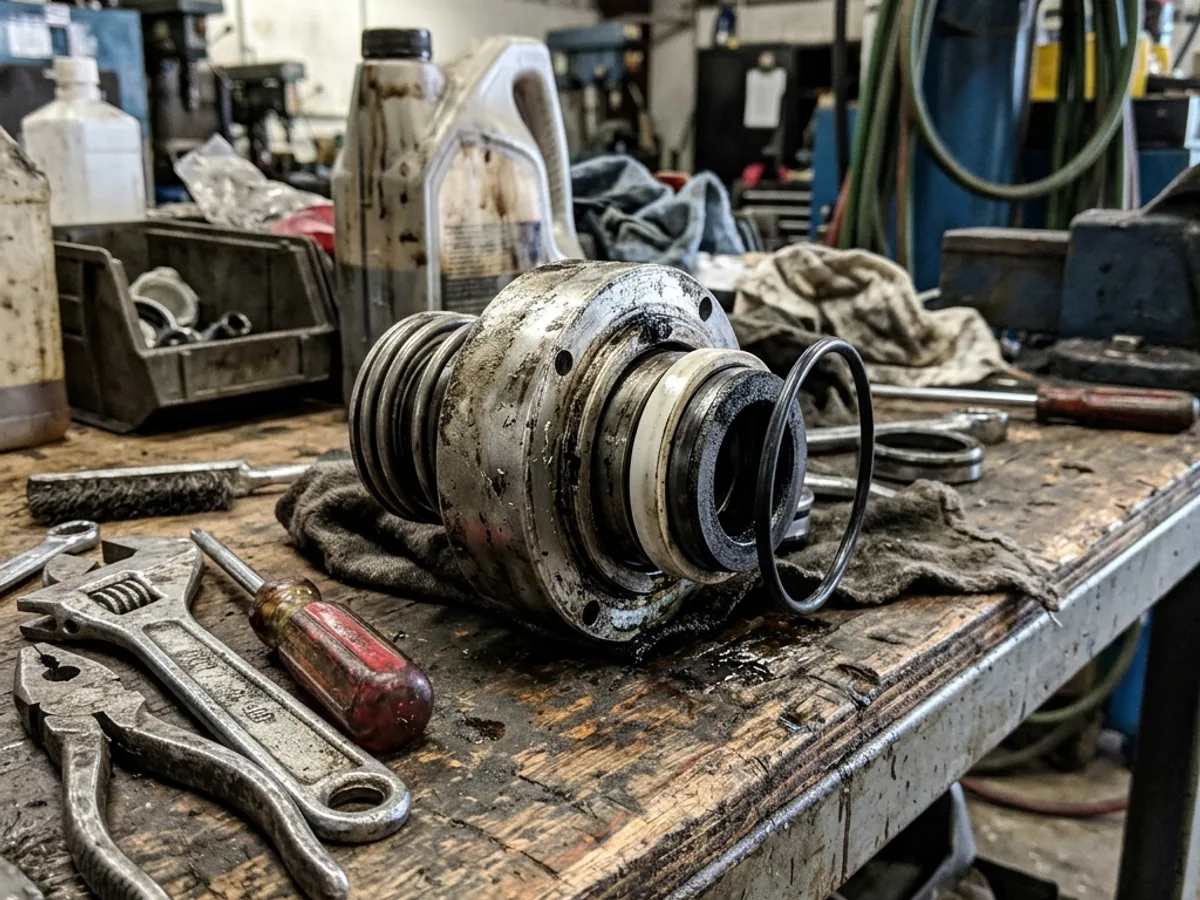
For a replacement, record the failure pattern before cleaning or discarding the old seal:
- face appearance and wear track;
- elastomer swelling, hardening, cutting, or extrusion;
- sleeve fretting, deposits, dry-running marks, or heat checking;
- bearing condition, vibration, shaft runout, and alignment history;
- recent process, startup, or flush-system changes.
An OEM-compatible replacement still needs verified installation dimensions and duty data. If the original code is unavailable, send the pump model, sample photos, and measurable dimensions through the replacement seal review page.
Chemical pump seal RFQ checklist
| Information | Why it matters |
|---|---|
| Pump make, model, and chamber drawing | Confirms installation envelope and connections |
| Fluid, concentration, contaminants, solids | Screens all wetted materials and fouling risks |
| Pressure and temperature ranges | Defines loading, vapor margin, and material limits |
| Shaft diameter and speed | Supports geometry and face-condition review |
| Current seal and failure observations | Prevents copying a known failure mode |
| Available utilities | Determines feasible support arrangements |
| Leakage and compliance objective | Guides arrangement and monitoring requirements |
| Quantity and maintenance strategy | Supports standardization, spares, and commercial scope |
References
- Hydraulic Institute: Mechanical Seals for the Pump Industry
- Hydraulic Institute pump FAQs
- EagleBurgmann: Mechanical seal technology and selection
Use this guide as an RFQ framework rather than a substitute for application approval.
Put the guide into practice
Related specification and RFQ pages
Frequently asked questions
Which operating data is needed to select a chemical pump mechanical seal?+
Provide the fluid and concentration, normal and upset pressure and temperature, shaft speed and diameter, solids or crystallization behavior, seal-chamber details, operating cycle, available utilities, leakage objective, and applicable project standard.
When should a cartridge seal be considered?+
A cartridge configuration can be useful when controlled assembly, repeatable installation, or maintenance standardization matters. It does not remove the need to verify the seal chamber, shaft condition, materials, arrangement, and support plan.
Can a material be selected from the fluid name alone?+
No. Concentration, temperature, contaminants, phase, cleanability, and upset conditions can change compatibility. Face, metal, gasket, and secondary-seal materials should be reviewed as a complete wetted system.
Continue researching