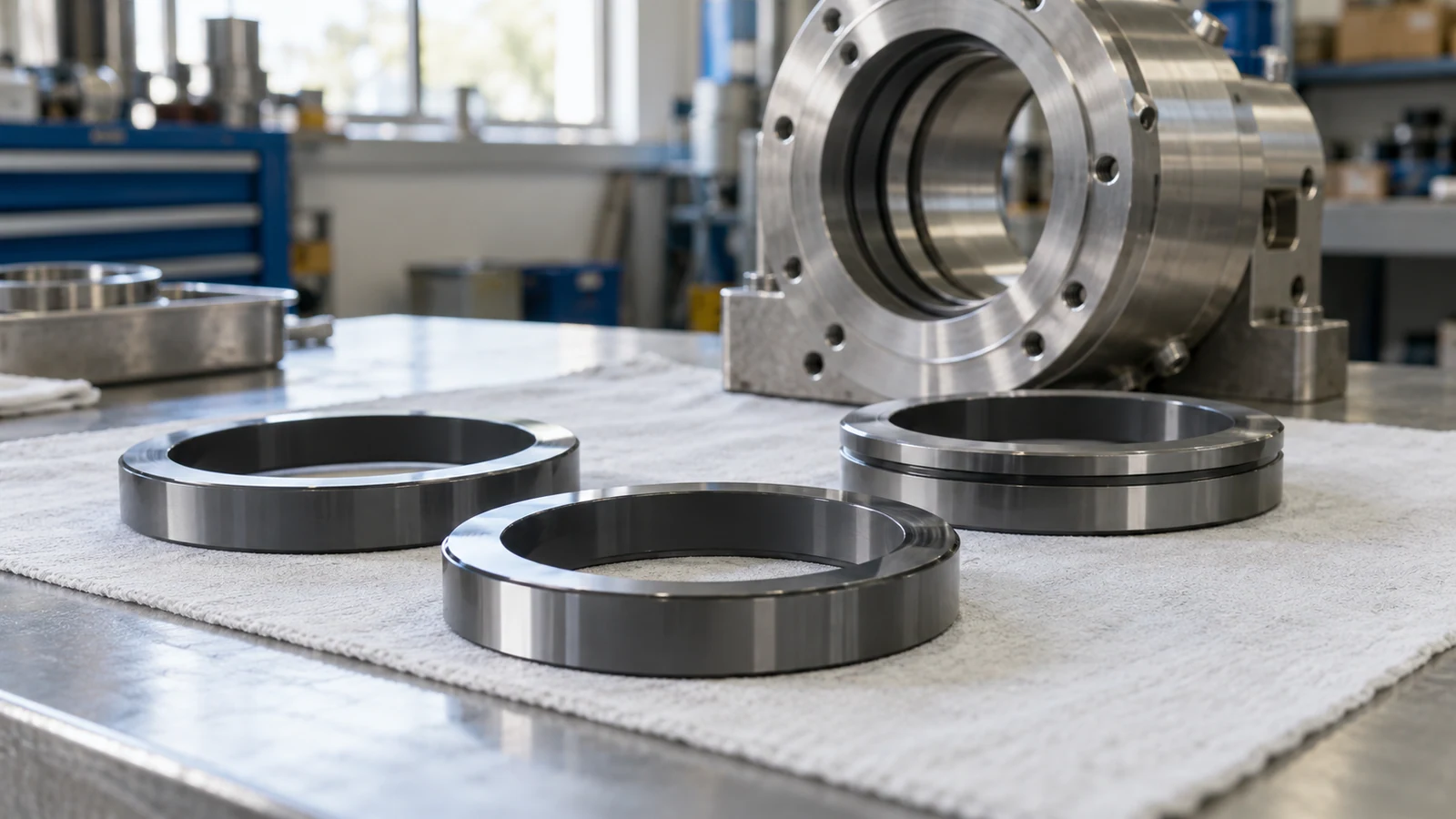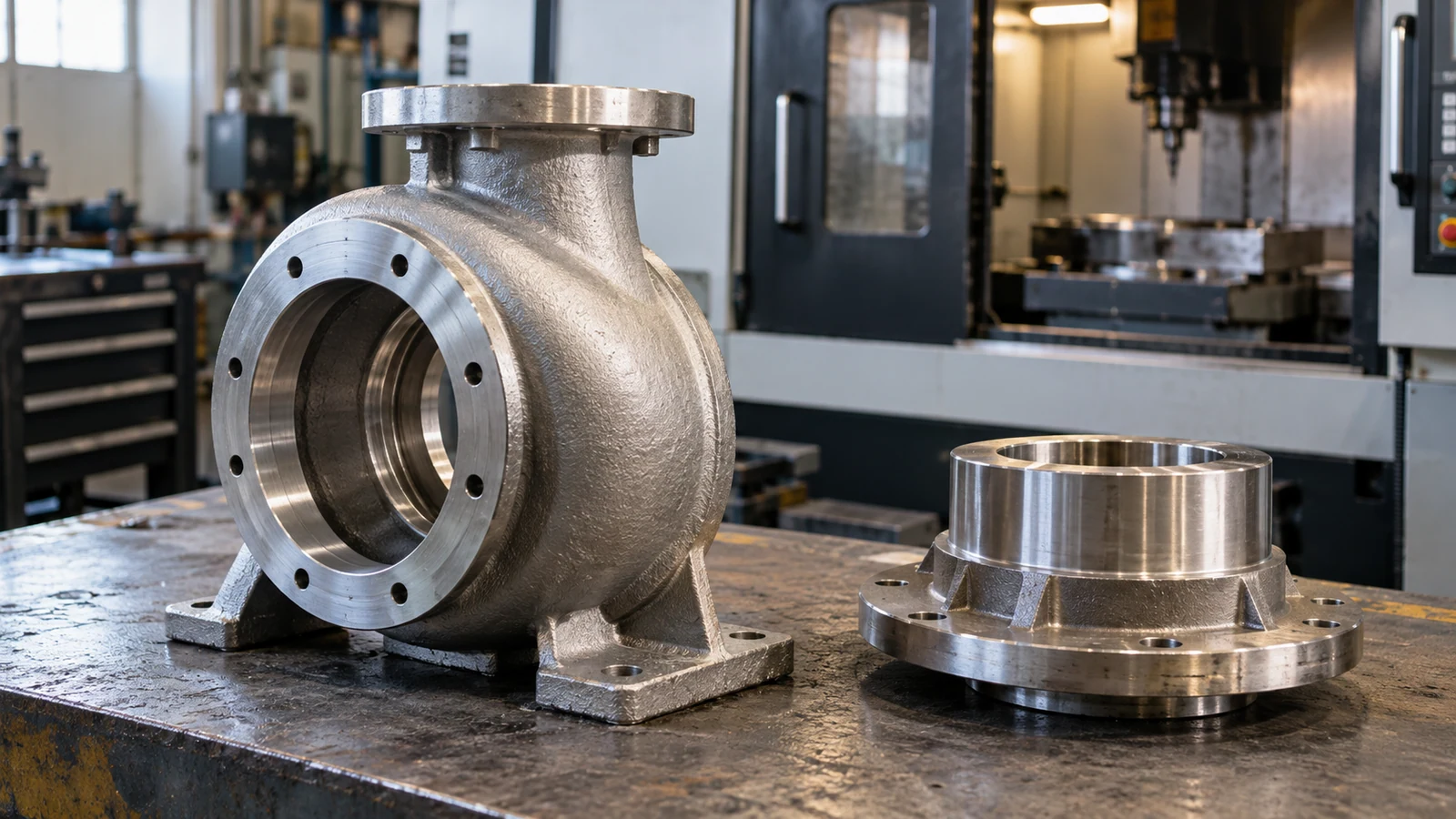
Evaluate 2205 and 316L pump parts by chloride exposure, component geometry, product form, welding, machining, and the cost of a repeat maintenance intervention.
On this page
Replacing a corroded 316L pump component with duplex 2205 can be a sensible engineering decision. It is most convincing when the damage mechanism, exposure conditions, and manufacturing route explain why the new material should perform better.
The grade premium is only part of the comparison. A pump component may need casting, machining, welding, heat treatment, or several of these operations. The finished part must also preserve fits, pressure boundaries, and the hydraulic geometry that made the original component useful.
When is 2205 worth considering instead of 316L?
Consider 2205 when the combination of chloride-related corrosion, mechanical loading, or repeated maintenance makes 316L unsuitable or costly in the actual service. Duplex offers useful corrosion and strength characteristics, but the selection still needs the liquid composition, temperature, geometry, and manufacturing condition.
Outokumpu’s Forta duplex datasheet describes duplex grades’ strength and resistance to several corrosion mechanisms, and compares them with austenitic grades including 316L. Its fabrication guidance also explains why welding, heat treatment, and machining are part of the material decision.
There is no single chloride concentration that divides all acceptable 316L duties from all duties requiring 2205. Temperature, oxygen, deposits, crevices, pH, and cleaning conditions change the local environment. A warm stagnant crevice can be more demanding than the bulk liquid analysis suggests.
The broader stainless grade guide compares material families. For an individual replacement part, the next step is to connect the observed damage to the part’s geometry and service.
The damage location helps define the upgrade
Corrosion under a gasket, attack near a weld, and wall loss in a high-velocity region are different starting points. Photograph and map the affected areas before removing deposits or machining away the surface. Record whether the damage is concentrated at an interface or distributed across the wetted part.
| Observation | Selection question |
|---|---|
| Pitting under deposits | What is the local chemistry and temperature when deposits remain in place? |
| Attack at a gasket or close fit | Can the crevice geometry, drainage, or cleaning practice be improved? |
| Damage near a weld | Did fabrication or surface restoration change the local material condition? |
| Directional loss in a high-flow area | How much of the loss is erosion, corrosion, or their combined effect? |
| Cracking in a stressed area | What mechanism links stress, environment, temperature, and material condition? |
This prevents the grade change from carrying the entire improvement claim. A better alloy can help while a deposit trap or poor surface condition continues to impose an avoidable load on it.
Match the specification to the product form
“2205” is a familiar alloy-family label, but a purchase order needs an exact designation and a product specification. A part machined from wrought bar and a cast pressure-containing component do not share an identical procurement route.
Outokumpu lists its 2205 products with UNS designations and particular wrought product forms. Those material data should not be copied directly into a casting acceptance schedule. A casting requires the appropriate cast grade, governing product standard, heat-treatment condition, and inspection scope selected for that component.
The same distinction applies to 316L. The commercial description of a pump as stainless steel does not identify the specification of every component. Recover the original material and drawing requirements before treating a replacement as a simple substitution.
For a precision casting, the RFQ should make clear whether the buyer supplies the finished design or expects a proposed material substitution for approval. Machining allowance, pressure-retaining surfaces, repair provisions, and required test locations then follow the actual drawing and selected specification.
Higher strength does not automatically reduce the section
Duplex strength can be valuable in a new design. A replacement part, however, is usually constrained by existing mating faces, flange dimensions, clearances, and pressure-boundary requirements. Reducing a section simply because a datasheet shows higher strength can change stiffness, vibration behavior, or local loading.
For a shaft or sleeve, the original dimensions may be governed by fit, deflection, wear allowance, or seal position rather than yield strength alone. For a casing, casting feasibility, wall transitions, bolt loads, and the applicable pressure design also matter.
Keep a material substitution and a geometry redesign as separate decisions. When the geometry remains fixed, evaluate the material change on its actual benefits in that geometry. When geometry changes, the revised design needs its own dimensional and performance basis.
Manufacturing conditions affect the delivered result
Duplex fabrication requires control of the material’s phase structure. Outokumpu identifies maintaining the phase balance and avoiding harmful precipitation as important welding considerations. The required procedure depends on the grade, section, and operation.
For a buyer, that translates into a defined manufacturing route: material supply condition, applicable welding procedure, heat treatment where required, surface restoration, and inspection of the final part. A chemical composition result alone does not describe all those conditions.
Machining also enters the quotation. Higher cutting forces and the need for a stable setup can affect tooling, cycle time, and achievable finish. Close-tolerance seal fits or bearing locations may therefore cost differently even when the component’s purchased mass is unchanged.
These are reasons to compare finished parts. A price per kilogram of raw material leaves out much of the work that determines the final cost and function.
Compare the premium with the maintenance problem it addresses
Build the economic comparison around the failed component’s intervention: replacement part, removal, installation, lost availability, and any consequential work. Then identify which portion a suitable material upgrade could reasonably avoid or extend.
If service records show that corrosion repeatedly drives replacement, that history can support a life-cycle comparison. If the damage mechanism remains uncertain, compare the manufacturing premium and define the observations needed during the next service period instead of inventing a longer life for duplex.
The best purchase specification captures the final choice in one consistent set of documents: exact material and product form, unchanged or revised geometry, manufacturing condition, surface requirements, and acceptance scope. That turns “upgrade to 2205” into a component whose cost and technical purpose can be assessed together.
Put the guide into practice
Related specification and RFQ pages
Frequently asked questions
Does a 2205 material certificate establish the corrosion performance of a finished part?+
The certificate establishes the reported material identity and tests within its scope. Finished-part performance also depends on product form, heat treatment, welding, surface condition, geometry, and the service environment.
Should every wetted part change when a pump casing changes to duplex?+
Review the complete wetted assembly, including fasteners, sleeves, wear rings, seal hardware, and joints. A casing upgrade may leave another component as the limiting material, but a blanket change is unnecessary when the existing parts remain suitable.
Continue researching