Material Selection Framework for Chemical Processing Plant Replacement Components
Material selection framework for chemical plant replacement parts based on fluid composition, temperature, pressure, corrosion mode, and equipment history.
On this page
A chemical-service material cannot be selected from the fluid name or a generic compatibility rating. The minimum review includes composition, concentration, contaminants, temperature range, pressure, velocity, phase behavior, cleaning conditions, damage mechanism, fabrication route, and the component’s operating history.
Replacement parts for chemical service are often requested by copying the material on an old drawing. That can reproduce an earlier compromise or ignore a process change. The selection should begin with the environment and the observed damage, then narrow candidate alloy families and fabrication conditions.
What service data controls the material decision?
The following inputs belong in the material review even when the equipment tag and original grade are known:
- every process constituent, concentration range, contaminant, dissolved gas, and water content;
- normal, startup, shutdown, cleaning, and upset temperature;
- normal and maximum pressure, vacuum exposure, and phase changes;
- velocity, agitation, solids, cavitation evidence, and stagnant crevices;
- existing alloy evidence, fabrication and heat treatment, coating or lining, and weld condition;
- the location, morphology, and rate history of corrosion, erosion, cracking, or wear.
Pressure is not usually the corrosion driver by itself, but it changes the required section, design rules, stress state, and consequence of loss of containment. Material screening and mechanical design therefore cannot be separated.
Why is a compatibility chart only a screening tool?
Fluid compatibility charts are starting points, not definitive answers. When consulting them:
A rating such as “excellent” is incomplete unless the table states concentration, temperature, aeration, exposure time, test method, material condition, and the form of corrosion considered. Data for one pure chemical may not represent a process mixture. Trace chlorides, oxidizing contaminants, deposits, or cleaning media can change the controlling mechanism.
Use compatibility data to reject clearly unsuitable candidates and identify questions for a producer or corrosion specialist. Where the published condition does not match the real service or the consequence of failure is high, define a qualified corrosion review, coupon program, or other project-specific verification.
How do alloy families change the tradeoff?
| Candidate family | Why it may enter the review | Conditions that still need checking |
|---|---|---|
| Austenitic stainless steel | General corrosion resistance, fabrication availability, cleanability | Chlorides, crevices, sensitization, stress-corrosion conditions, and actual grade condition |
| Duplex or super duplex stainless steel | Higher strength and resistance to some chloride-related damage modes | Temperature limits, phase balance, welding procedure, heat treatment, and environment-specific corrosion data |
| Nickel-based alloy | Broad options for severe acid, chloride, or mixed environments | Exact alloy, oxidizing/reducing character, impurities, fabrication, weld filler, and cost |
| Titanium alloy | Useful resistance in selected oxidizing or chloride-bearing environments | Reducing acids, crevices, galvanic coupling, ignition or embrittlement hazards, and producer limits |
| Lined or non-metallic construction | Isolates the structural material from selected process fluids | Permeation, pressure, temperature, vacuum, mechanical damage, grounding, and repair method |
The family name is not the purchase specification. Confirm the exact grade, product form, solution treatment or other delivery condition, weld procedure, filler, allowable repair, surface condition, and inspection evidence.
Component geometry changes the damage mechanism
Reactor agitator shafts
These components experience high torsional fatigue in addition to chemical attack.
Pits, crevices, seal fretting, weld details, surface condition, and changes in section can combine with cyclic loading. Review the shaft load and movement, wetted zones, seal and bearing interfaces, fabrication route, surface finish, and the location of any crack initiation before changing alloy.
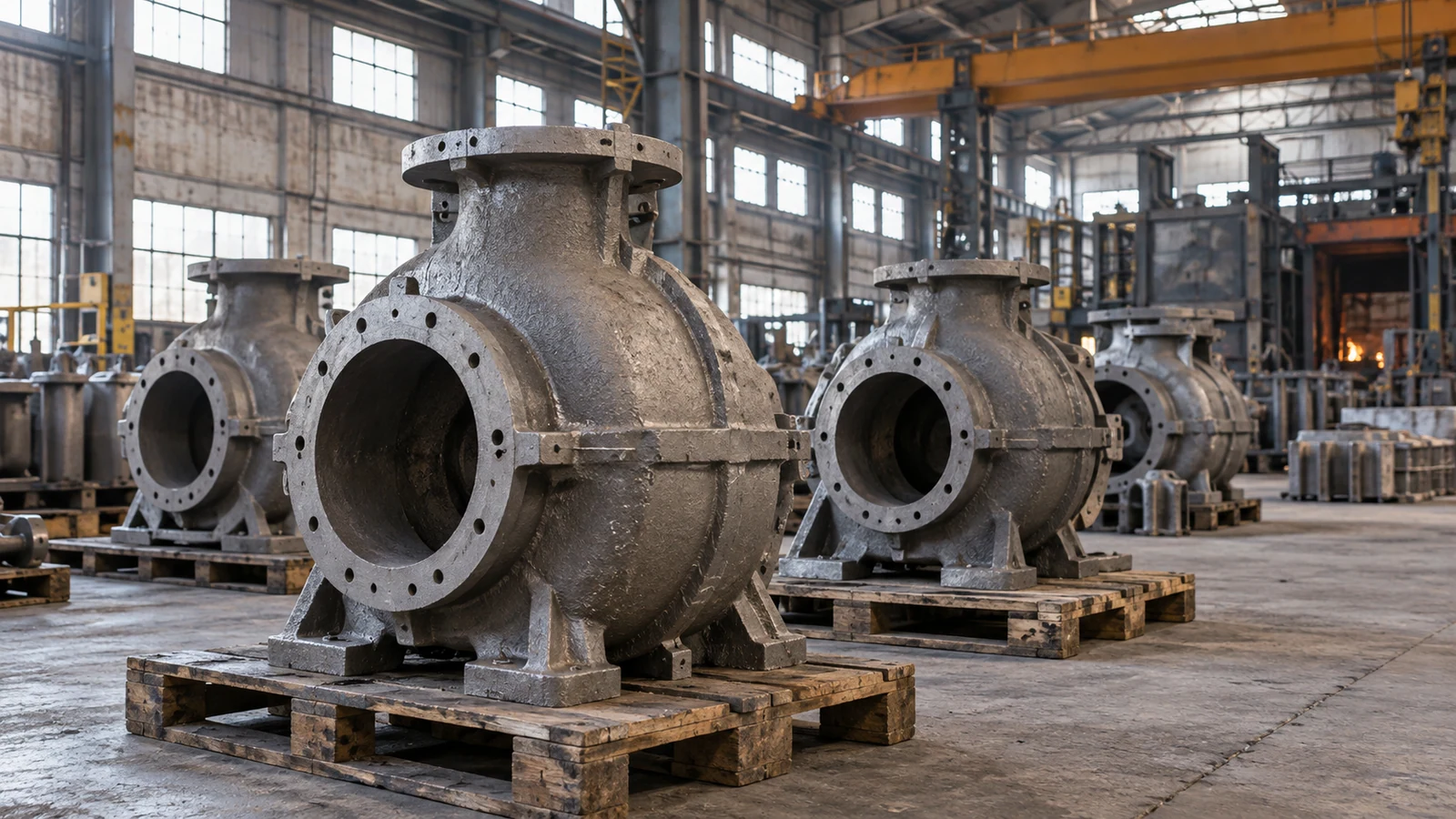
Pump casings and impellers
Pumps handle the dual threat of corrosion and erosion (erosion-corrosion).
Velocity, solids, recirculation, cavitation, and local turbulence can remove films or expose fresh material. A harder alloy or coating is not automatically better if the substrate, adhesion, crevice, impact, repair, or chemical compatibility is wrong. Record the damage map and pump operating history alongside the chemistry.
Valve bodies and trim
Valves must maintain precise sealing surfaces while exposed to varying flow dynamics.
Seat leakage, throttling erosion, crevices under gaskets, hard-facing compatibility, and galvanic coupling can govern different parts of the assembly. Specify body, trim, seat, fastener, gasket, and overlay materials as a system instead of upgrading one part in isolation.
When do dissimilar metals create a galvanic risk?
Galvanic corrosion requires an electrical path, an electrolyte, and a potential difference. Severity also depends on polarization behavior, environment, coatings, crevices, and the exposed cathode-to-anode area ratio. A small active area coupled to a large noble area can be especially unfavorable.
Where possible, simplify the material couple. Otherwise review electrical isolation, coating both sides appropriately, sealing the electrolyte path, corrosion allowance, cathodic protection, and inspection access. Isolation kits must also remain compatible with pressure, temperature, fire, electrical grounding, and flange-design requirements.
Define the approval boundary in the RFQ
The RFQ should identify the process envelope, controlling damage mechanism, exact material specification, fabrication and weld condition, required corrosion or mechanical testing, positive material identification where needed, traceability, and any material-substitution approval. For a failed replacement part, preserve the as-found condition and operating history before cleaning or sectioning the sample.
Put the guide into practice
Related specification and RFQ pages
Frequently asked questions
How do I select the correct material for a pump casing handling mixed acids?+
Do not select from the words 'mixed acids' alone. Record every constituent and concentration, water content, contaminants, aeration, normal and upset temperature, pressure, velocity, and cleaning cycle. Screen candidate materials against current producer data for that complete environment, then obtain application-specific corrosion review or testing where published data does not match the service.
What is galvanic corrosion and how do I prevent it in a flanged assembly?+
Galvanic corrosion can occur when dissimilar metals are electrically connected in a conductive environment. Review the actual electrolyte, potential difference, cathode-to-anode area ratio, crevices, coatings, fasteners, and electrical continuity. Options can include compatible material pairing, electrical isolation, coating strategy, corrosion allowance, or cathodic protection, but the complete assembly must be reviewed.
Continue researching